
You sell MarTech. Your attribution is broken. Your prospects can tell.
Have you ever wondered whether each channel is playing their part with data?

Hey, it’s Jess 👋. Welcome to the Audience First weekly newsletter, helping B2B companies lead with their audience rather than the platform.
You’ll learn how to improve your marketing by starting with your ICP rather than the platform.
If you’re looking to introduce an audience focused approach to your marketing strategy, book an appointment today.
Read time: ~2.5 minutes
Subscribe and be the first to read future posts:
Whenever I started a new marketing role I always completed mandatory training.
It was usually long and repetitive. All I wanted to do was get my hands dirty in an ad account.
The training usually covered general stuff, ie: company values, security, safety and more.
I always felt as though something was missing. Why was there no cross functional training?
How do we know that everyone identifies the ICP equally or that attribution is recorded in the same way?
Understanding how other channels contributed to the overall business goals was a mystery.
Every channel worked in a silo, unless there was a QBR or lead issue.
Operating in this manner usually resulted in broken attribution.
Inconsistency in the ICP and multiple measurement systems could have flown a few years back.
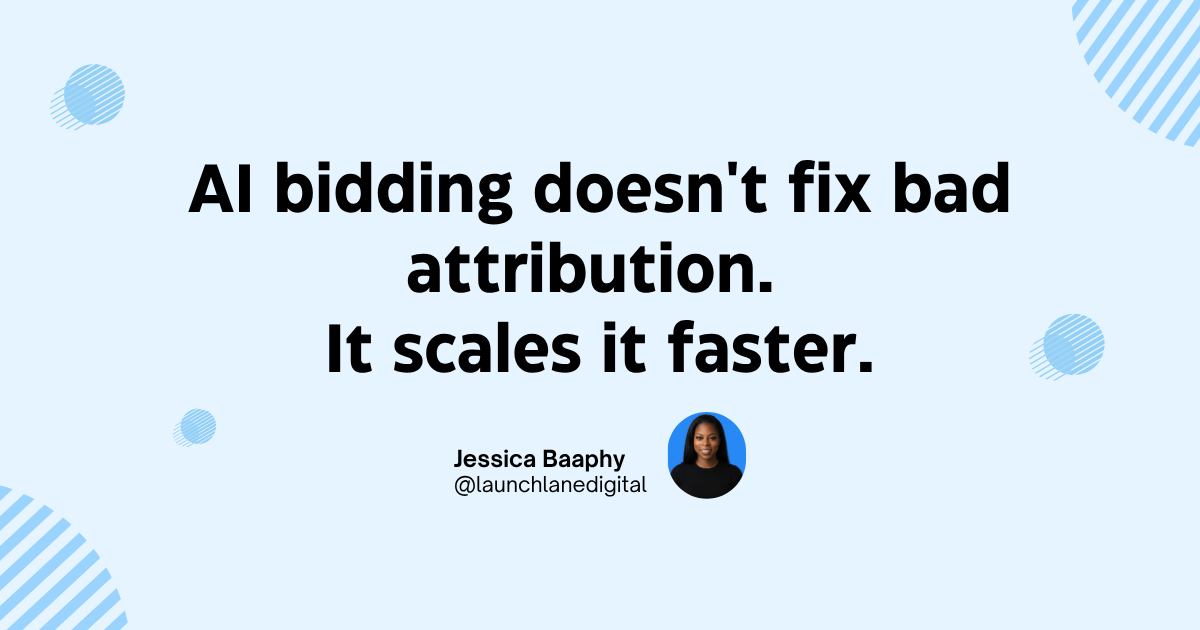
But in 2026, ad platforms have changed. They optimise based on the signals you feed them.
If you feed them inconsistent signals, automation amplifies the wrong prospects.
The reporting dashboard is usually the first suspect but it’s usually due to broken attribution.
The channels are optimising towards the wrong things.
Having the right signals that all teams agree with will fix your attribution.
In 2026, the 3 signals you should optimise against to fix attribution and increase pipeline:
ICP fit — this is your firmographic (company size, tech stack, region) and behavioural (pain point, buying trigger) definition. The ICP should be agreed across marketing, sales and product; otherwise, marketing could be sending leads they think are qualified but sales reject them. Once the ICP fit has been agreed, it can be used to build LinkedIn matched audiences off CRM or lookalikes from closed won.
Product signal — this is evidence of the user’s activity within the product. Has the user activated the product? Have they hit a PQL moment? Or have they shown intent inside the product? Paid ads should use this data to set up audiences that retarget trial users based on their behaviour. You can take it even further by feeding the PQL as a conversion event to the AI bidding.
Sales signal — this is confirmation from sales that a lead became a real pipeline. What stage counts as pipeline for you ie: SQL or opportunity created, closed won? Once this is determined, the data should be used to create a conversion event in ad platforms. This will allow you to optimise for closed won rather than trials and signups.
Change doesn’t magically happen; it takes intentional actions.
This week, ask yourself whether:
Marketing, sales, and product share a written definition of “qualified”?
When did sales last tell you which trials/demos actually converted to ARR?
What signal are you feeding the platforms today?
If you found this post useful, subscribe to be the first to hear about the latest edition.
Connect with Jess
Is this your first time here? Subscribe (it’s free)
Follow me on LinkedIn for more insights
Strategise with me: Introduce an audience focused approach to your marketing efforts → book an appointment today

Recommend Jess Baaphy’s Newsletter to your Readers
An audience first marketing newsletter, helping B2B companies lead with their audience rather than the marketing platform.